Switzerland · Hut guide
How Staffed Mountain Huts Work in Switzerland
Reservations, half board, dormitories, water and the early daily rhythm: what I would have liked to know before my first normal hut night.
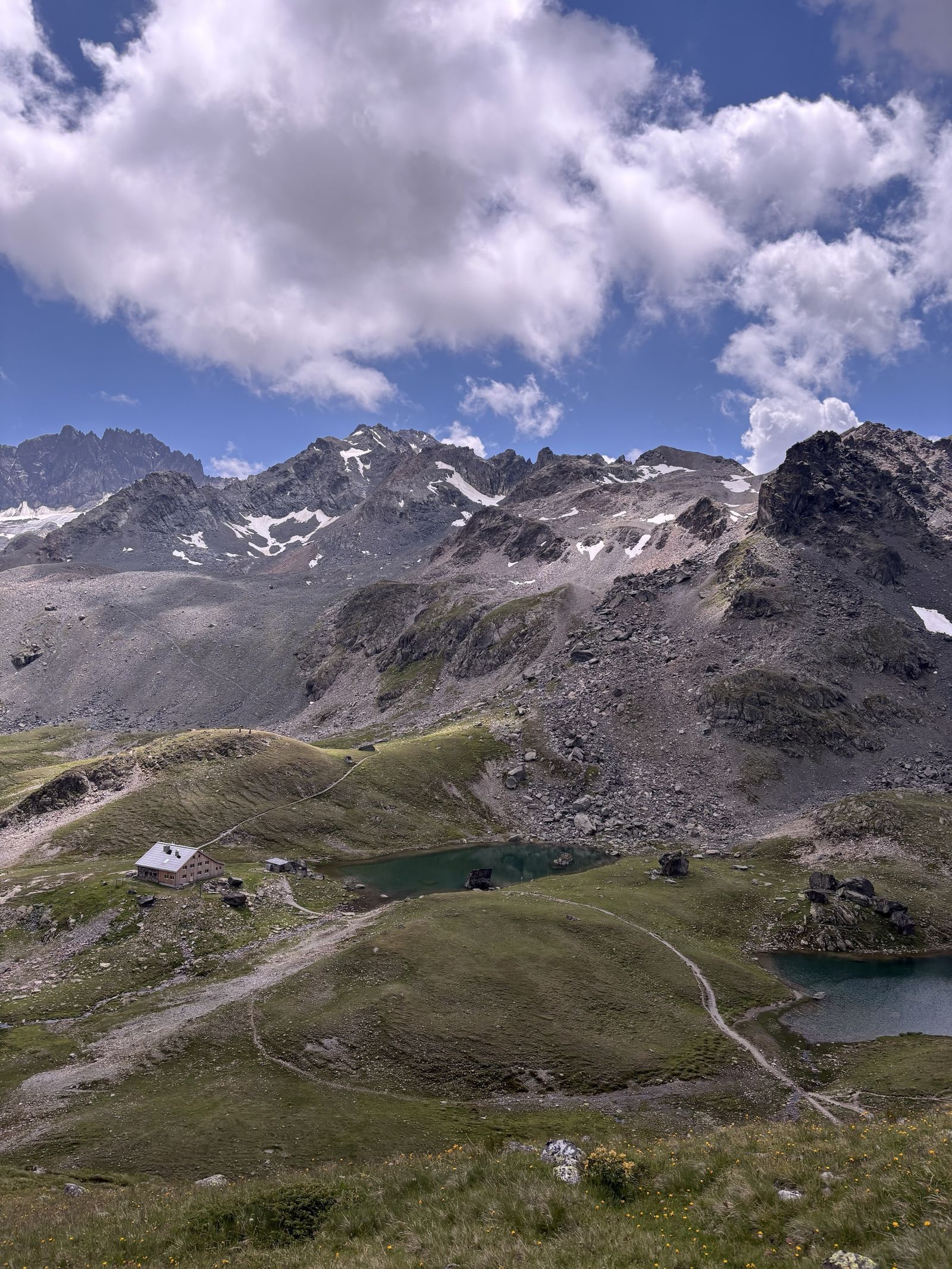
Five things first
In brief
- Reserve I would book a staffed hut in advance and cancel promptly if the plan changes.
- Budget honestly Half board currently often costs roughly CHF 70 to 100.
- Bring A hut liner, earplugs, hut shoes, cash and a power bank.
- Do not assume A shower, socket, Wi-Fi and card payment are not available everywhere.
- For a first night Choose an easy approach and leave enough time to arrive calmly.
What a staffed mountain hut actually is
Mountain huts are a central part of hiking and mountaineering in Switzerland. The Swiss Alpine Club currently lists 153 huts across almost every mountain region of the country, from relatively comfortable hiking huts to remote high-alpine buildings reached only by serious approaches.
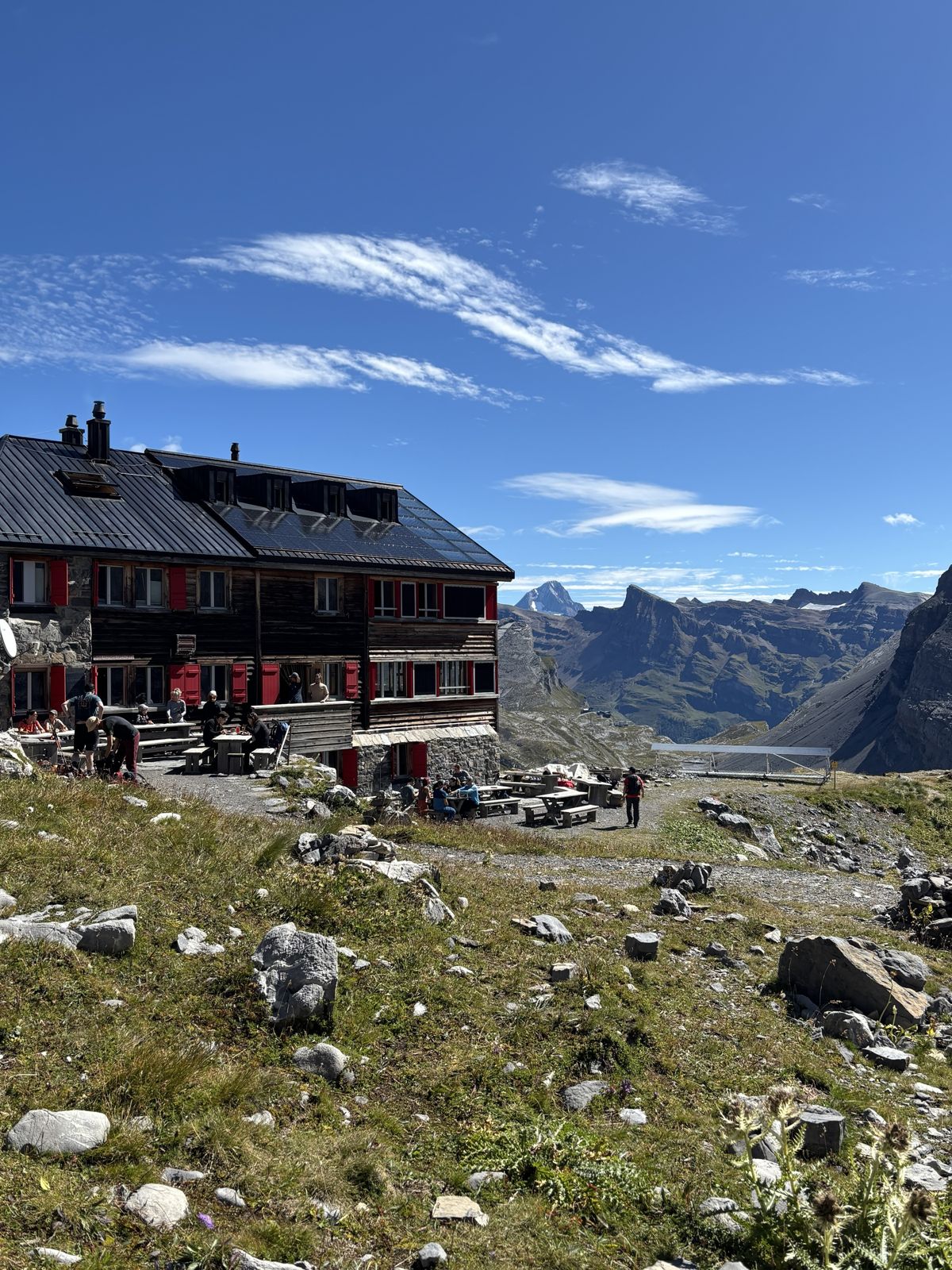
For multi-day routes they are incredibly practical. A hut can sit exactly where two walking days meet, allowing you to continue without carrying a tent, a full sleep system and a large cooking setup.
This guide is about normal staffed huts. Self-service huts and winter rooms work differently, especially around water, food, heat and access, so I treat them in a separate guide.
A staffed hut is not automatically a primitive timber cabin with ten mattresses. Easier-to-supply huts can feel like simple mountain guesthouses, with a dining room, hot meals and sometimes smaller bedrooms. Remote huts remain much more basic because every litre of fuel, bag of food and piece of equipment has to reach the building somehow.
Opening dates are specific to each hut
There is no single opening date for Swiss huts. Many hiking huts begin their main summer season around mid-June, while higher huts may not open until late June or July. Many stay staffed through September, and some into October.
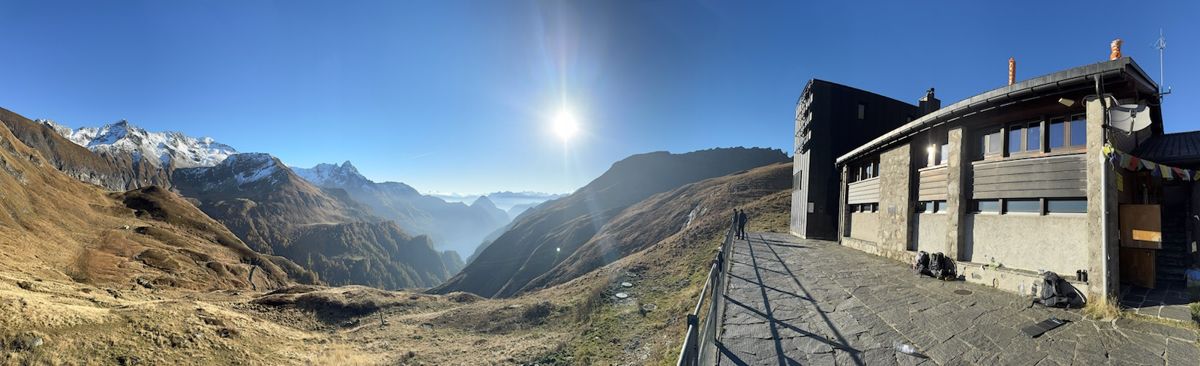
For a trip in June, September or October I never rely on a general season. I check the hut's own page and the current route conditions. Snow on the approach or an early winter storm can change the staffing period.
A winter room may remain available after the main hut closes, but this is not guaranteed. Construction, damage or operational decisions can close it too. Check the exact hut instead of assuming that a building marked on the map will be open.
Reserve, and cancel if your plan changes
I would reserve a staffed hut rather than simply arriving in the afternoon. Popular huts can be full on good summer weekends, and the hut team needs accurate numbers for beds, meals and staffing.
Many huts can be booked through the SAC Route Portal and the shared hut-reservation system. If online booking has closed, a direct call can still be useful when space remains.
A confirmed reservation is binding. The SAC's current general terms allow free cancellation until 18:00 two days before the stay, although the details shown by the individual hut should still be read. If you cannot come, tell the hut instead of leaving a bed and meal unused.
Price, half board and special meals
Staffed Swiss huts are not cheap. The SAC currently gives an average of roughly CHF 70 to 100 for a night including half board. My own stays fit that range fairly well.
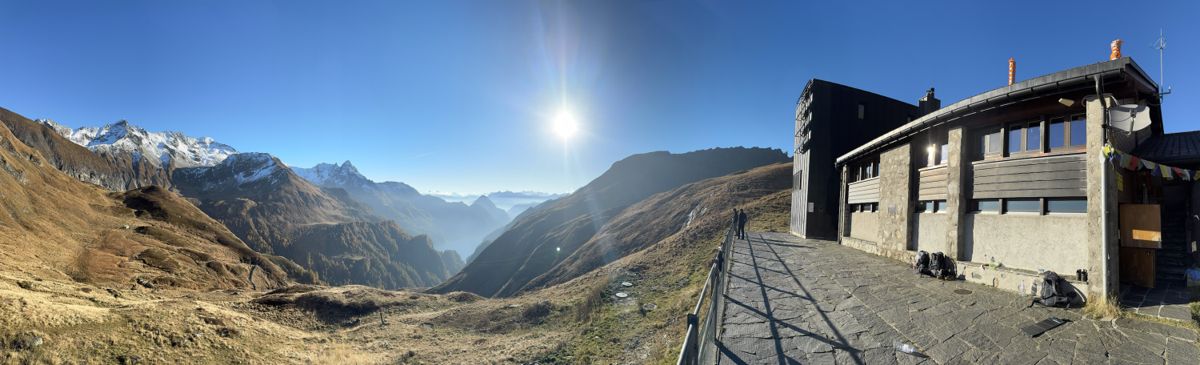
The price makes more sense once the supply chain is visible. Food, gas, maintenance and waste have to be moved into and out of places that may have no road. Some huts have a material cableway; others depend heavily on helicopters and human work.
I normally choose half board when the budget allows it. It removes dinner, a stove and breakfast from my pack and gives me a proper hot meal after a long day.
Dinner is usually a fixed, simple menu, often soup followed by a substantial main course and a dessert. Breakfast is included, while drinks, cake, snacks and lunch packs are normally extra.
Vegetarian food is common, but vegan meals, coeliac requirements and serious allergies should be discussed when booking. A hut cannot replace ingredients at short notice in the way a restaurant in a town can.
What happens when you arrive
The routine is uncomplicated. You check in with the hut team, leave your mountain boots in the designated area and change into hut shoes. Many huts provide shared slippers, but I prefer carrying my own light pair.
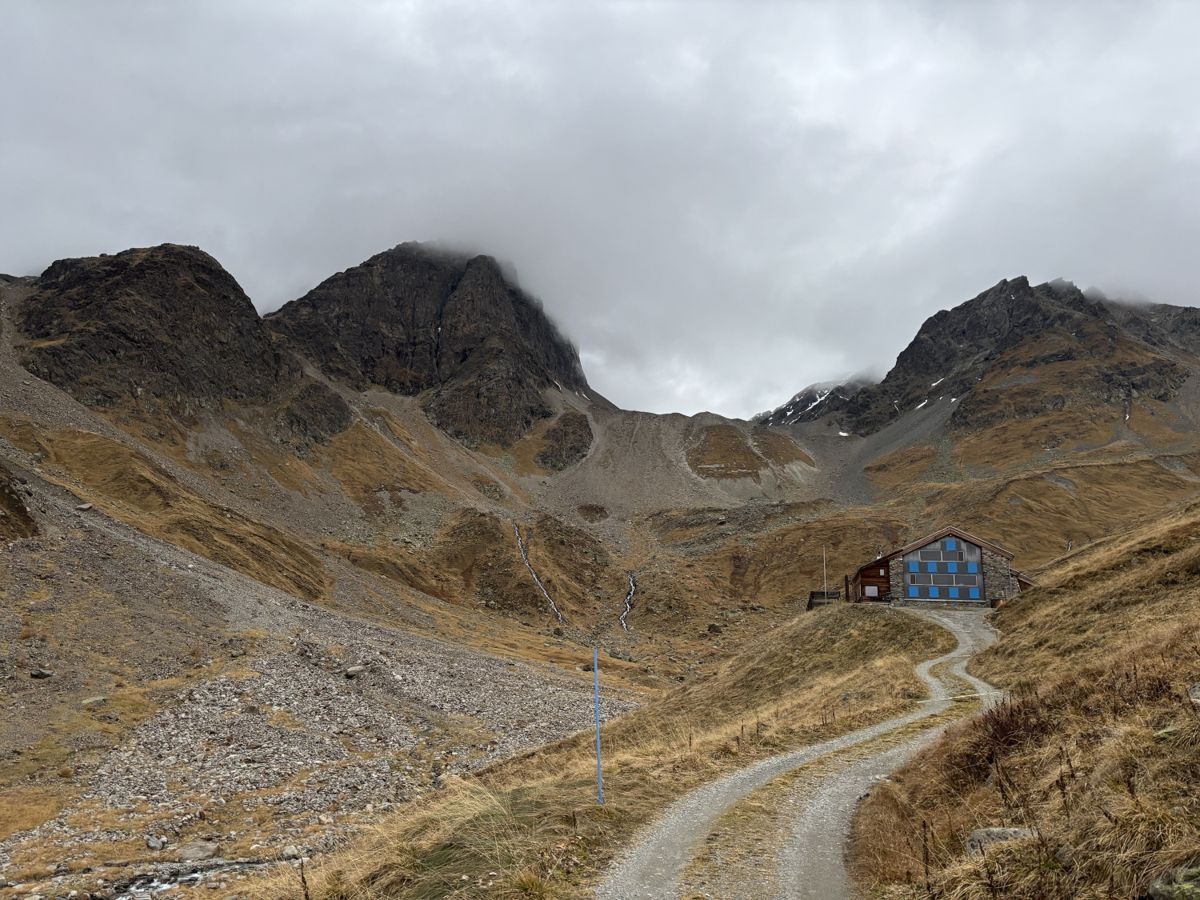
You are given a bed and the times for dinner and breakfast. If I arrive around three or four in the afternoon, there is normally time for a drink, cake, drying clothes or a small walk nearby before dinner.
Sleeping ranges from large mattress dormitories to rooms with four to eight beds. Some huts also have smaller family or group rooms. I prefer the smaller rooms when available, but limited privacy is part of the hut system.
For a normal staffed hut I carry a hut sleeping bag or liner, not a full sleeping bag. Mattresses, pillows and blankets are provided. The liner is an important hygiene layer because heavy hut blankets cannot be washed after every guest.
Earplugs are almost as important as the liner. In a room of fifteen or thirty people, someone will snore and someone else may get up at four in the morning for an alpine start.
Water, showers, power and payment
Toilets are standard, but their comfort varies. Showers are much less common and usually cost extra. Water and energy are scarce at altitude, and some huts depend on snowmelt or seasonal sources.
Card payment and TWINT are increasingly common, but I still carry enough cash to cover the night, food and drinks. A card terminal is only useful while its power and connection work.
The same applies to charging a phone. Some huts have sockets, some restrict charging and others cannot offer it. I bring a power bank and do not plan around guest Wi-Fi or a reliable mobile signal.
The rhythm of an evening and the next morning
Dinner often begins around six or half past six. Afterwards people play cards, talk about the next day's route and exchange current information. On one trip, hikers arriving from the opposite direction told us exactly where snow remained on the route we planned for the next morning.
That kind of conversation can be more useful than an online report written several days earlier. It does not replace your own decision, but it gives the route a current human context.
Quiet hours usually begin early because both guests and staff start early. Breakfast times may be split according to different objectives. By nine in the morning, a hut can already feel almost empty.
My compact packing list and the basic etiquette
- Hut sleeping bag or liner
- Earplugs, headlamp and a small power bank
- Light hut shoes, minimal toiletries and personal medication
- A dry base layer and spare socks
- Cash and a membership card if you have one
Inside the hut, take off outdoor shoes, respect quiet hours, use water and electricity sparingly and keep shared rooms tidy. If you will arrive late or not at all, contact the hut. It is a communal mountain building, not a four-star hotel.
What I would choose for a first hut night
The approach matters more than the building. Some huts are reached by an easy two-hour trail; others require a serious alpine route. For a first night I would choose a hut with a straightforward approach and enough time to arrive calmly.
Huts can work very well for families too. A clear destination, dinner and a night in the mountains often make a route easier to divide mentally, but distance and difficulty still have to suit the children rather than the marketing label.
The biggest disadvantage for me is price. Several nights with half board add up quickly. Even so, for a first multi-day hike I would begin with a staffed hut. It removes a large part of the logistics and lets the journey remain about walking through the mountains and continuing from the same place the next morning.
Checked separately