Denali · Wildlife & natural history
Wildlife in Denali: What You Can Realistically See
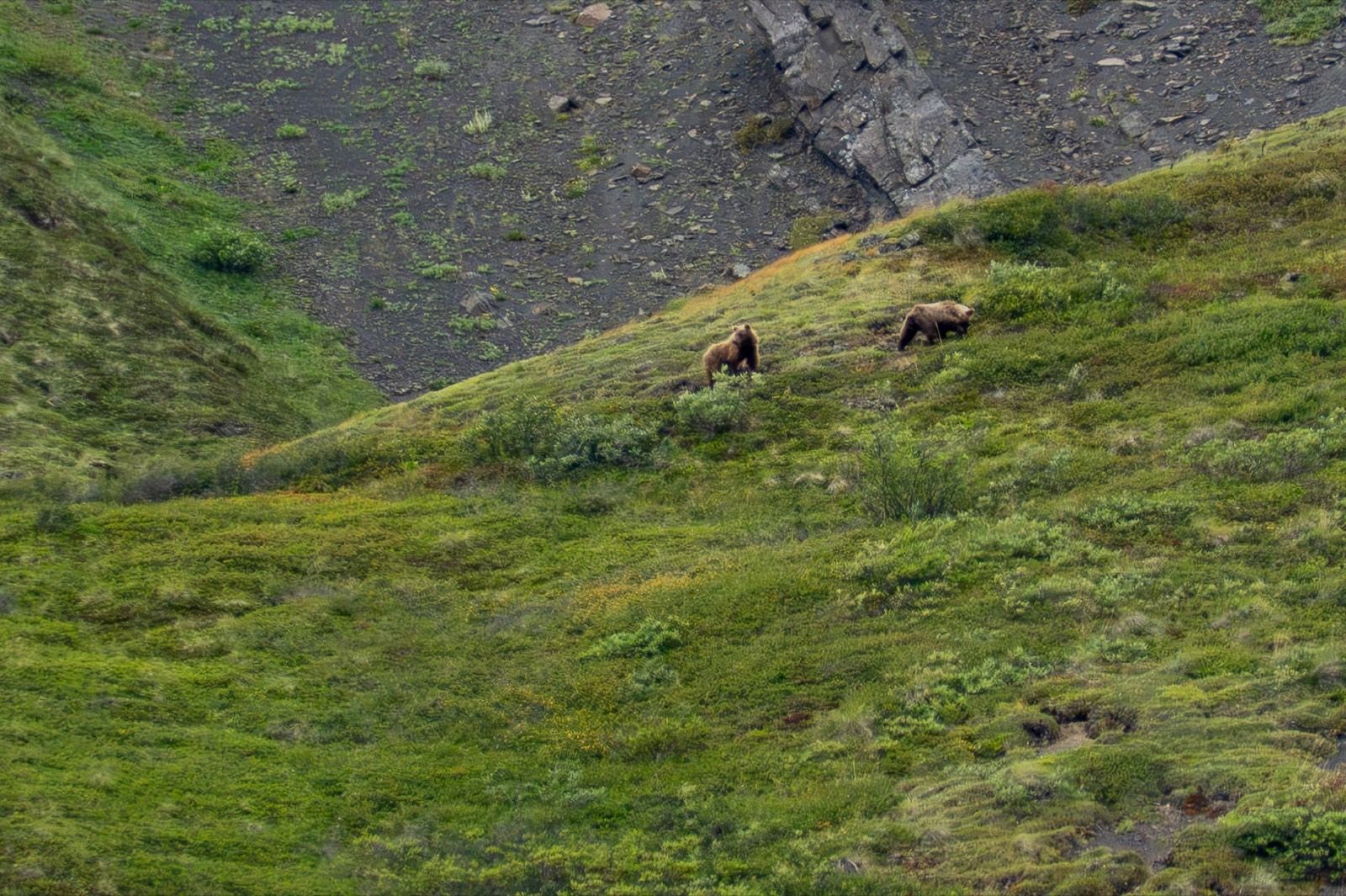
Most animals appeared as small movement in an immense landscape. That distance was not a disappointment; it was the honest shape of watching wildlife here.
Five things first
In brief
- Expect distance Most wildlife is a small shape in a very large landscape.
- What we saw Grizzlies, caribou, Dall sheep, one cow moose and many smaller species.
- Best tool A bus full of people scanning the tundra is surprisingly effective.
- Bring Binoculars; for photographs, a longer lens and realistic expectations.
- Respect Distance rules are minimums; changed behaviour means you are too close.
The bear beside the bus
One of our most memorable sightings did not happen during the Tundra Wilderness Tour but on the bus ride to our Discovery Hike. Farther into the park, a bear walked directly towards our bus along the road and then passed it. The road was apparently simply the easiest way through the terrain.
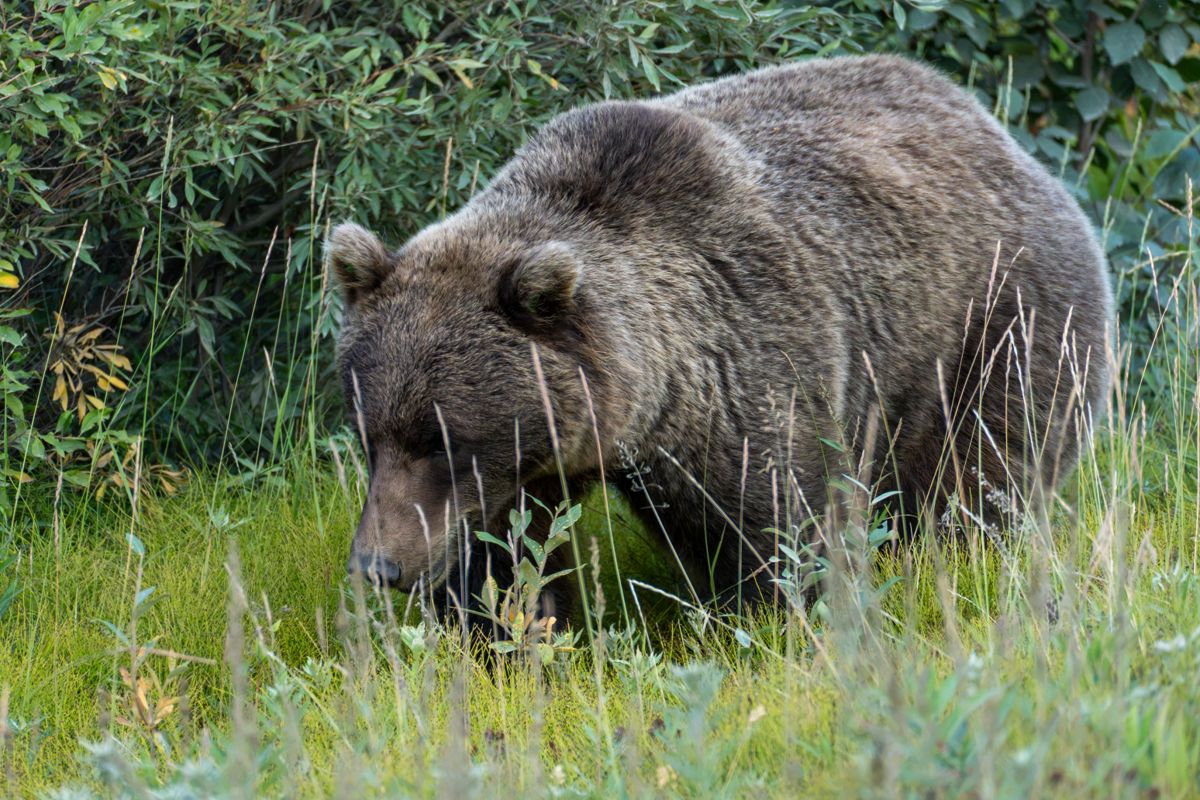
We could watch from the bus without approaching the animal ourselves. Our ranger later told us that it was only his second encounter at such close range that season. The moment was exceptional, but certainly not something to expect on an ordinary journey.
Most of the other bears we saw were several hundred metres away. In some cases, we noticed them only because another person on the bus caught a movement in the tundra.
What we saw in four days
During the Tundra Wilderness Tour, we saw roughly five bears. Four were far away, while one came much closer to the road. We also saw about 20 to 30 Dall sheep, almost always high on distant mountain slopes.
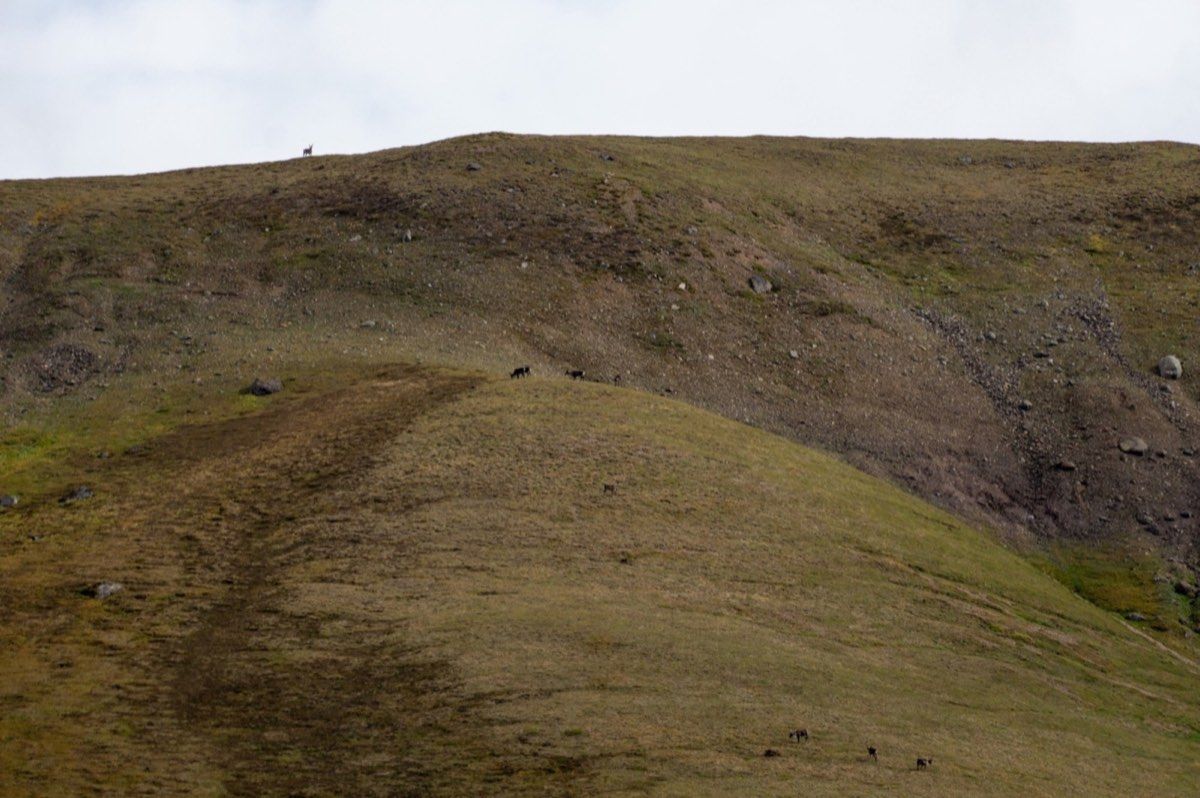
There were several caribou as well. Some stood alone reasonably close to the road, while others moved in small groups across more distant ground. Later, we also saw a cow moose around the Savage River area.
Our smaller wildlife and birds included snowshoe hares, squirrels, Willow Ptarmigans, Canada Jays, Boreal Chickadees, Dark-eyed Juncos, Black-billed Magpies, Common Ravens and White-winged Crossbills. Not every observation produced a spectacular photograph. The smaller animals still made even the quieter parts of the park feel alive.
Grizzly bears
Bears were probably the animals we most hoped to see. Most sightings occurred in open tundra farther into the park, where movement can sometimes be detected from a considerable distance because the vegetation is low.
We were told that bears begin feeding more intensively again from around the middle of August and may therefore become more visible. Our experience fitted that explanation, but it is not a guarantee for a particular travel month. Visibility also depends on weather, vegetation, the route and simple luck.
Caribou
We saw caribou alone and in smaller groups. They can be relatively easy to detect in open country and still remain several hundred metres away. Without binoculars, we would probably have seen some only as dark points.
Caribou also made me realise how difficult it is to judge distance in Denali. An open area may look manageable, while actually extending several kilometres across.
Dall sheep
The Dall sheep we saw were almost always much higher on the mountain slopes. Against grey rock, they first appeared only as small white dots. Once someone on the bus had found a group, binoculars or a telephoto lens made them much easier to recognise.
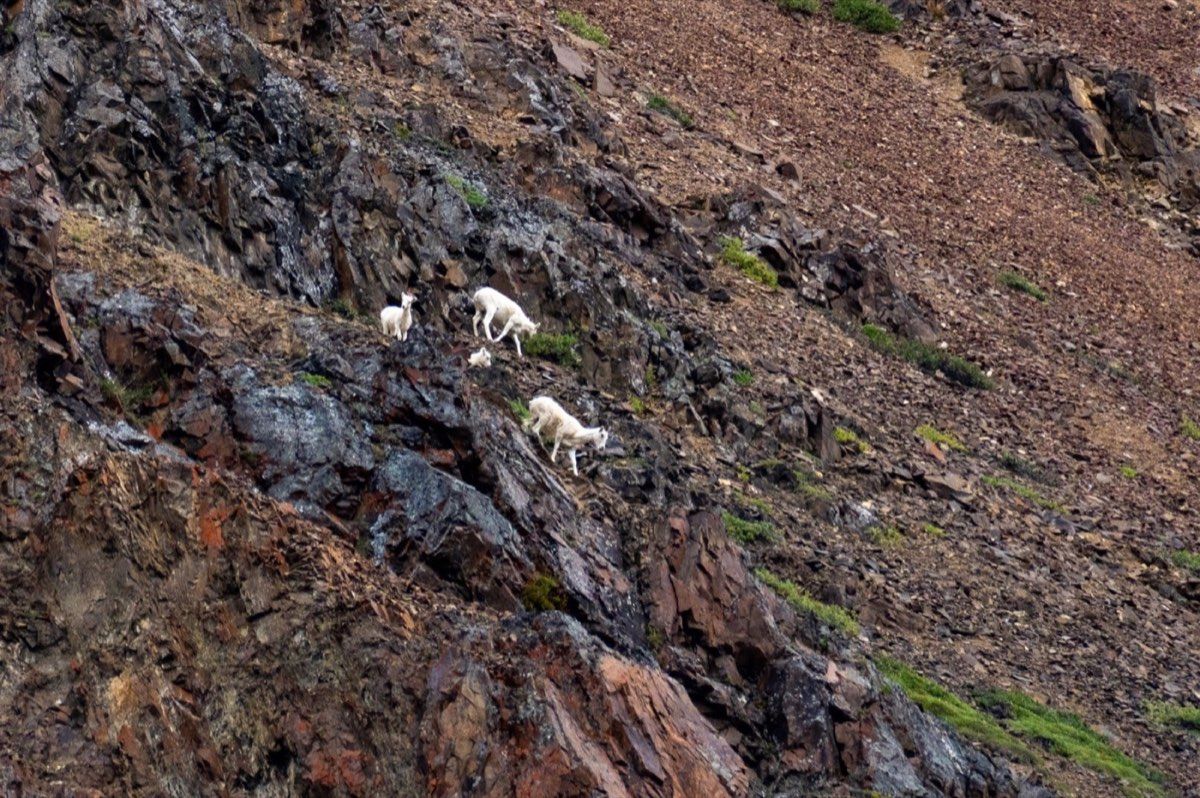
Photographically, they were difficult despite their numbers. The distance was usually so great that even a long lens produced more of an impression of the animals within the landscape than a conventional wildlife portrait. That is part of the reality of watching wildlife in Denali.
Moose
We saw moose much less frequently. During one of our later journeys, we found a cow near Savage River. We were told that sightings may improve towards the end of August and beginning of September as the animals become more active before the rut.
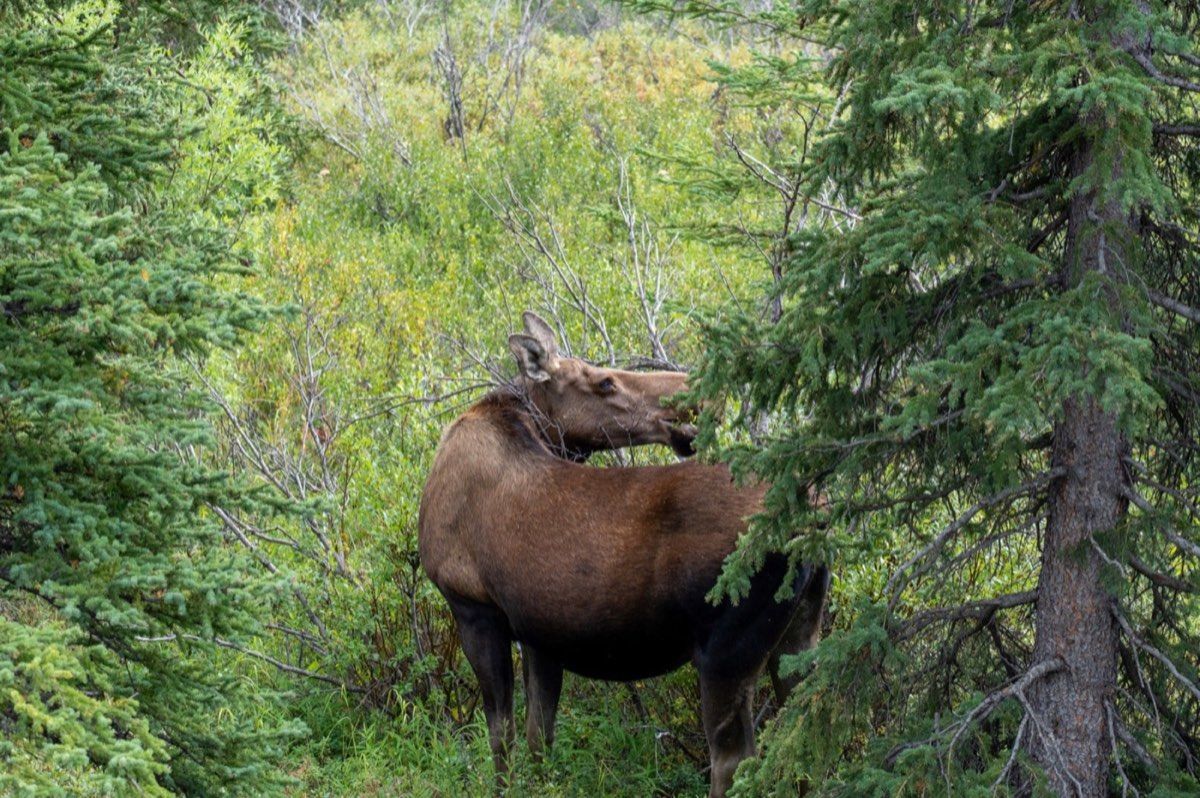
That seasonal statement still needs to be placed alongside a reliable source before publication. Our own experience was limited to a single moose sighting.
Smaller animals and birds
Around the entrance and in wooded areas, we saw especially many snowshoe hares, squirrels, Canada Jays and Boreal Chickadees. Farther into the park, Willow Ptarmigans appeared more often in the knee- to waist-high vegetation.
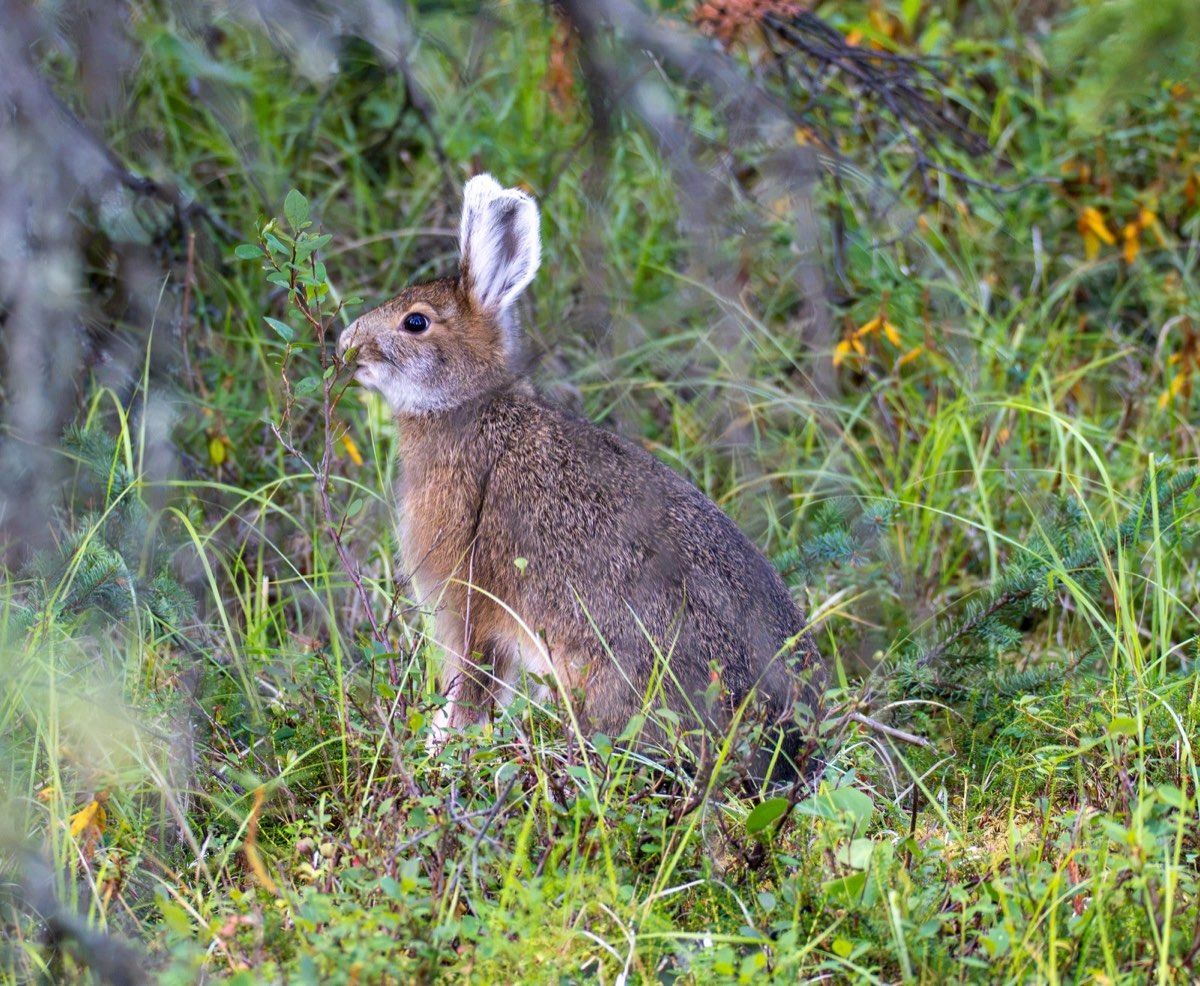
Rivers, forest edges and transitions between woodland and open tundra were particularly interesting to us. I would still avoid promising fixed hotspots. Animals move, and a place that works one day may be completely empty the next.
Why the bus helps
One of the greatest advantages of a bus is the number of people scanning the landscape at the same time. Anyone with limited experience finding wildlife in enormous terrain benefits significantly.
When someone notices an animal, they alert the other passengers and the driver can stop when possible. This happens on both guided tours and green transit buses. You should not expect every animal to remain in place or present itself well for photographs.
Binoculars and camera equipment
I would definitely take binoculars to Denali. Many animals are simply too far away to observe properly with the naked eye.
I photographed most wildlife with a Sony A6700 and the Sony 70–350 mm lens. The bus windows could be opened or lowered, allowing me to avoid photographing through glass. Even then, movement, distance and very limited time were often the greater challenges.
Not every wildlife photograph needs to be a close-up. In Denali, a small bear in an immense tundra landscape may show more honestly what the encounter felt like.
Distance and respectful behaviour
In Denali, the minimum distance is 300 yards from bears and 25 yards from other wildlife. If an animal changes its behaviour because of your presence, you are too close regardless of the measured distance.
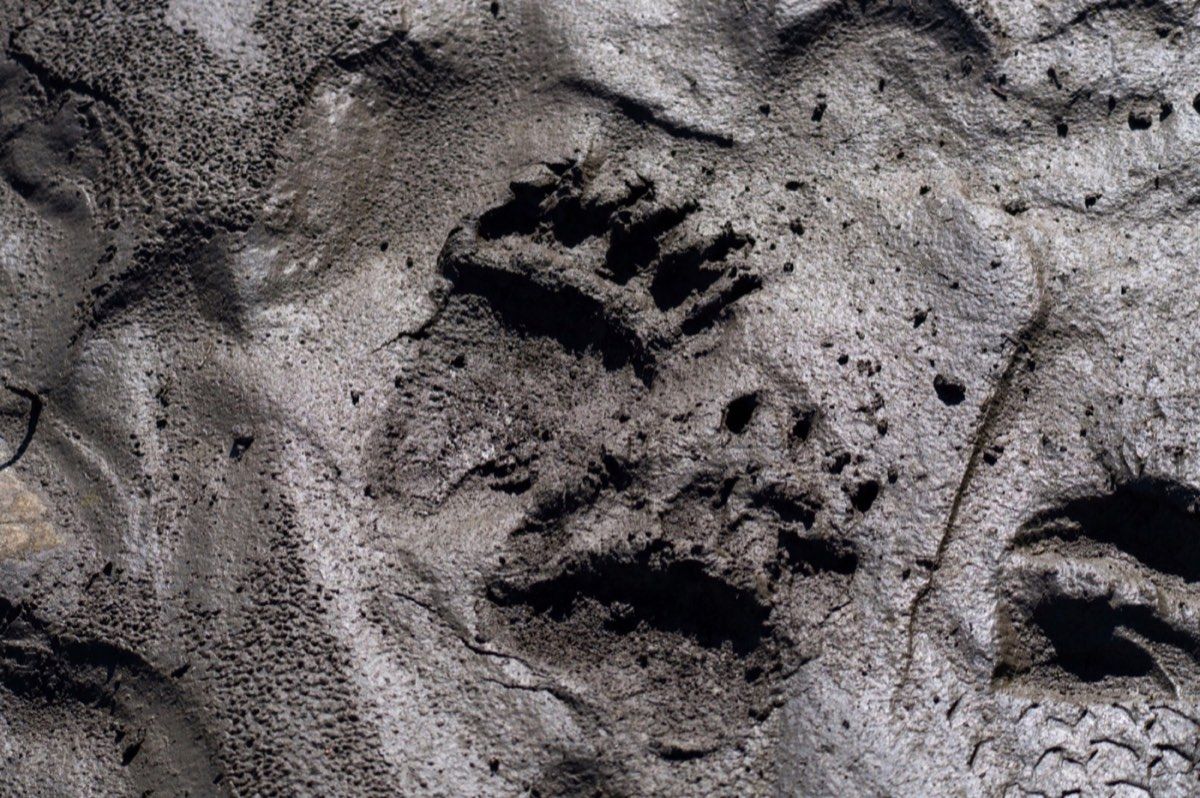
Food and rubbish must never be left behind. Wildlife should not be fed, followed or pressured for a photograph. The bear beside the bus was close not because we approached it, but because the animal chose to walk past the stationary vehicle.
Keep expectations realistic
It is entirely possible to spend several days in Denali without seeing a bear or moose. The mountain itself may remain behind cloud throughout an entire visit as well.
We were exceptionally fortunate. I would not turn our sightings into a probability. Binoculars, patience and realistic expectations simply improve the chance of noticing animals that are small, distant or easy to overlook.
Denali is worthwhile even without a complete list of large mammals. The landscape is more than a background for wildlife. It is the reason a tiny movement on a distant mountain slope can suddenly become so compelling.
Checked separately