Denali · Practical destination guide
Denali Without a Car
We built the whole trip around buses, Riley Creek Campground and the simple fact that a private car is of limited use farther along the Park Road anyway.
Five things first
In brief
- Short answer Denali is one of Alaska’s easier major places to visit without driving.
- Getting there Coaches and the Alaska Railroad connect Anchorage with the entrance.
- Practical base Riley Creek connects well to the visitor centre, bus depot and station.
- Inside the park Buses are needed beyond the publicly drivable road section anyway.
- My timing Two days introduce the park; three add a Discovery Hike; four give weather flexibility.
Why we planned Denali without a car
When I learned that I would be studying in Seattle, I knew fairly quickly that I wanted to use its geographical position for another trip. At first, I was undecided between Alaska and Mexico. In the end, I realised that I was unlikely to have many opportunities to reach Alaska as easily as I could from Seattle.
One of the places I especially wanted to see was Denali National Park and the mountain that gives it its name, the highest in North America. We had one clear limitation from the beginning: neither my sister nor I have a driving licence. The entire trip needed to work without a car.
After some research, it became clear that this would be much easier than we had expected. Within Alaska, Denali is one of the places that I think works particularly well without a private vehicle.
Anchorage to Denali
Without a car, the main options from Anchorage are the railway and several coach services. The train takes considerably longer and, at the time of our trip, would have cost roughly USD 200 per person each way. The coach cost about USD 115 when we booked and also promised good views along the route.
We chose Alaska Coach Travel and took the early departure at around 06:15. In mid-August, the bus was surprisingly empty. There were about eleven passengers in a vehicle with more than 50 seats, so we could spread out, sleep and recover a little from the early start.
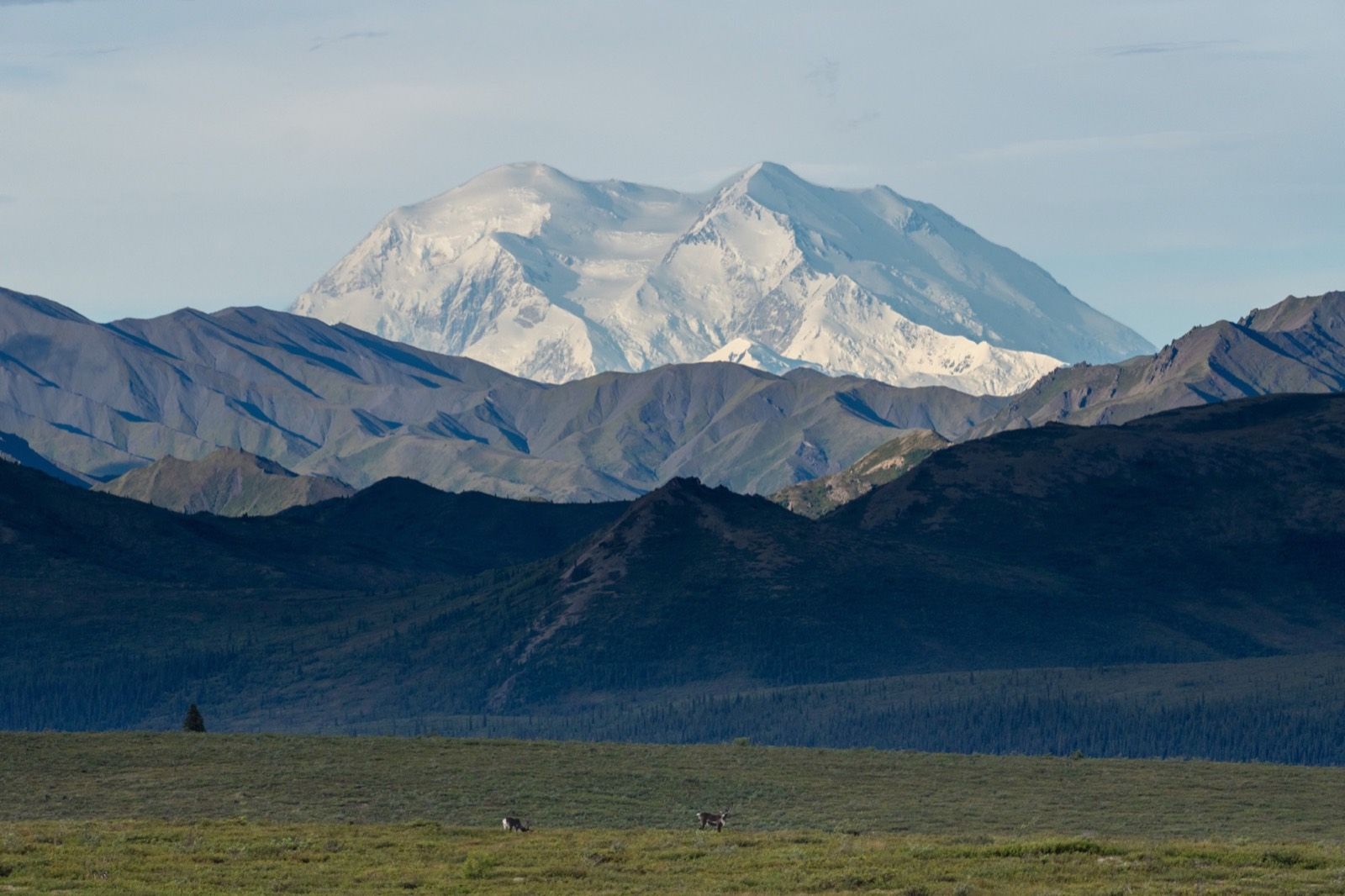
After roughly two hours, we stopped in Talkeetna. Coffee and breakfast were available in the morning, and there was also a terrace with a view. Denali itself remained hidden from us.
Because the bus was so quiet and the journey ran smoothly, we arrived at the Denali Visitor Center slightly earlier than planned. Prices, departure points and schedules can change and should always be checked again before travelling.
How the entrance area fits together
On a map, the entrance area initially looks somewhat spread out. In practice, it is reasonably easy to understand. The Morino Grill, a park store and several shuttle stops lie around the visitor centre. Farther towards Riley Creek are the Denali Bus Depot and the Backcountry Information Center. Most longer journeys into the park begin at the bus depot.
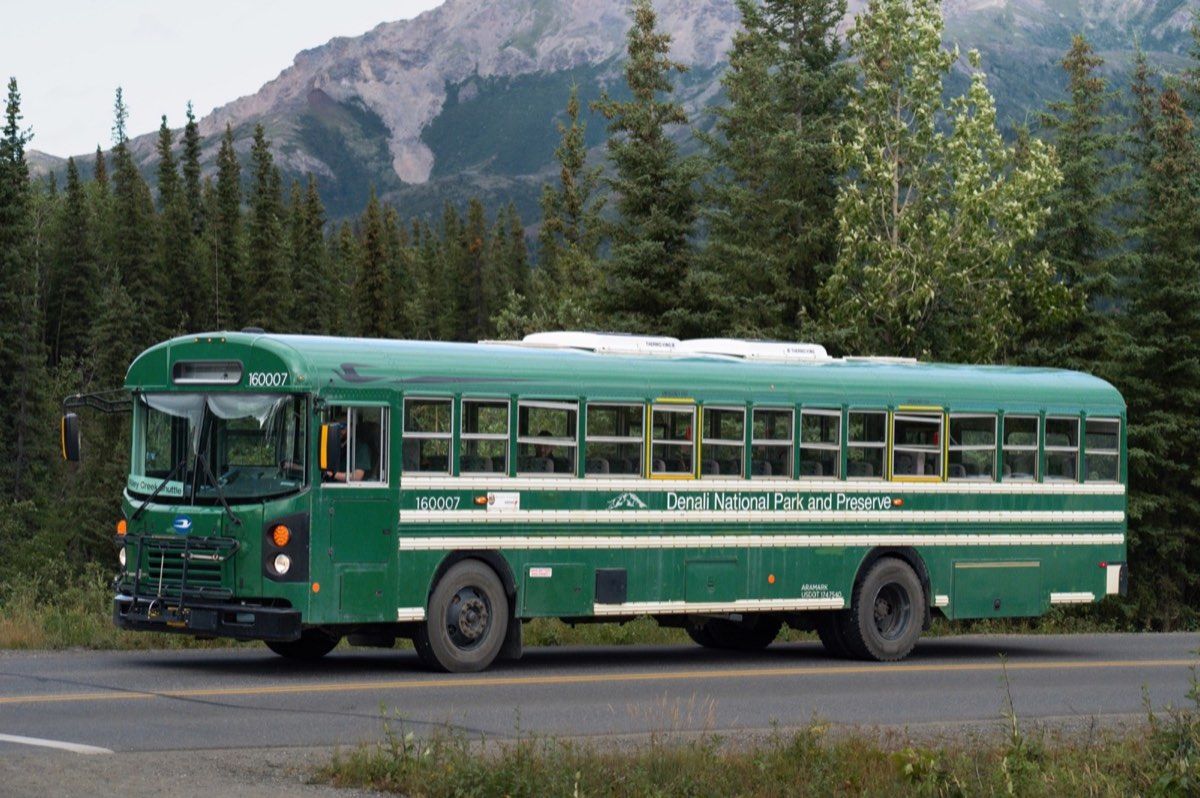
Free shuttles connect the railway station, visitor centre, bus depot, Riley Creek Campground and Riley Creek Mercantile. Without luggage, many of these distances are also walkable. With tents and larger bags, we were still glad to use the shuttle.
Between the visitor centre and Riley Creek, there are more pleasant woodland trails in addition to the paved or gravel cycle path. We preferred the McKinley Station Trail to walking beside the more heavily used entrance road.
Riley Creek as a car-free base
For us, Riley Creek Campground was the most practical base. Check-in took place at the Mercantile. We had reserved a B site and selected B49 in Wolf Loop after arriving. Toilets, the food-storage locker and the main paths were easy to reach, yet the pitch did not feel especially busy.
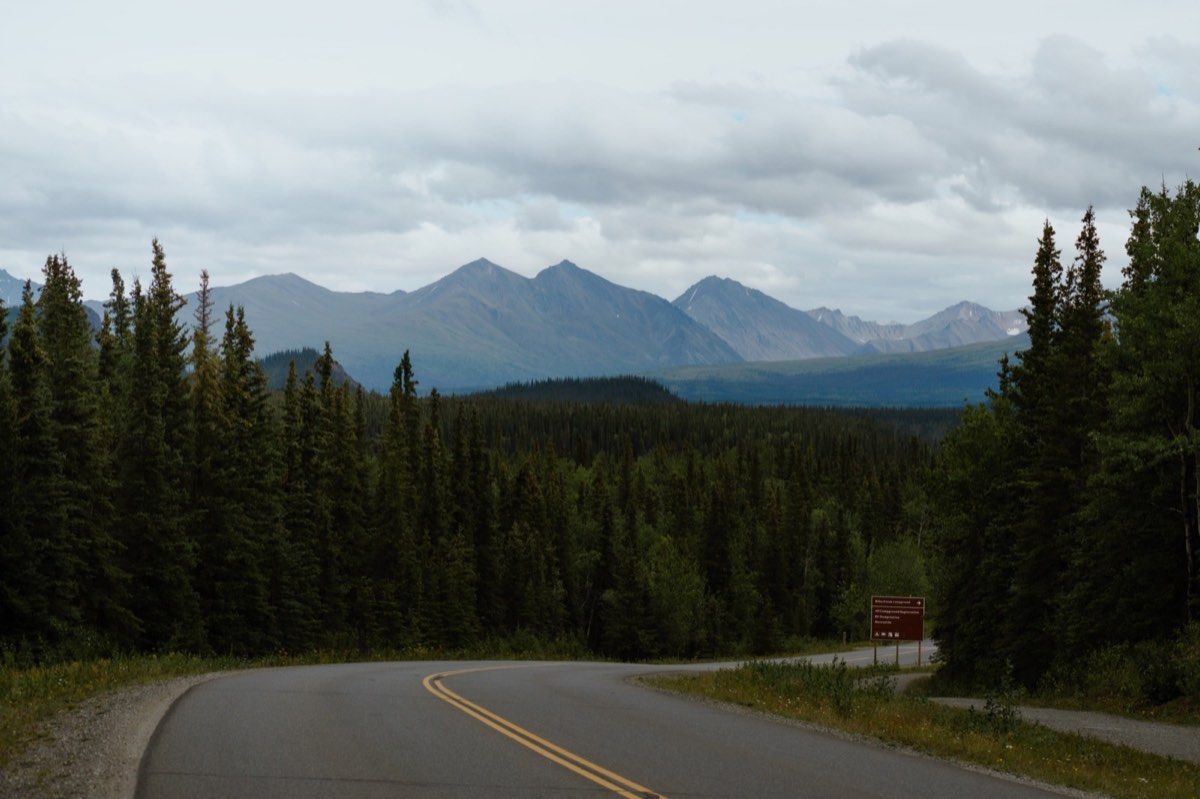
The Mercantile sells snacks, drinks and some camping supplies. I would not depend on it for a complete food shop. We brought most of our food with us. For a drink, an ice cream or a small forgotten item, however, it was more than sufficient.
The separate Riley Creek article covers the loops and facilities in more detail. For a car-free trip, the main point is simple: the campground is close enough to the bus depot, visitor centre and railway station to make early departures and a final day with luggage manageable.
Reaching the interior of the park
A car would only have helped us to a limited extent inside the national park. In summer, private vehicles can travel only on the front section of the Park Road. Anyone going farther into the park needs a transit bus or an organised tour anyway.
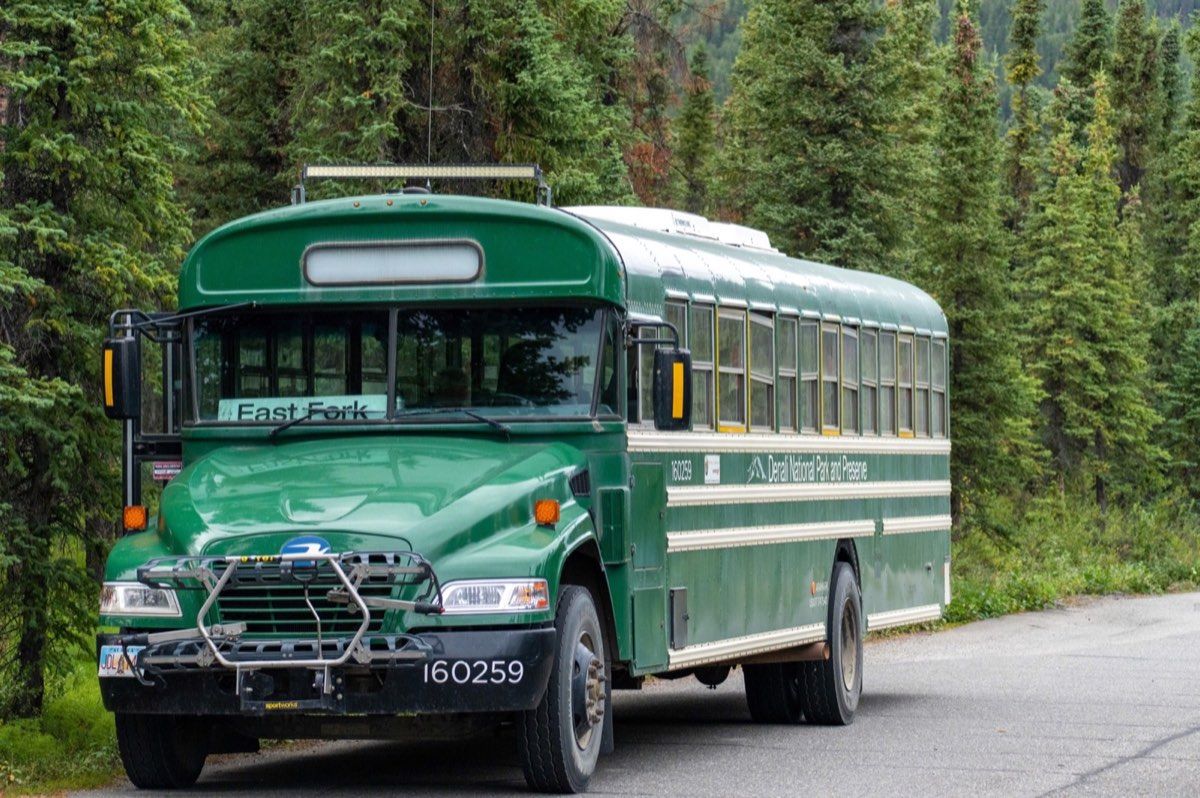
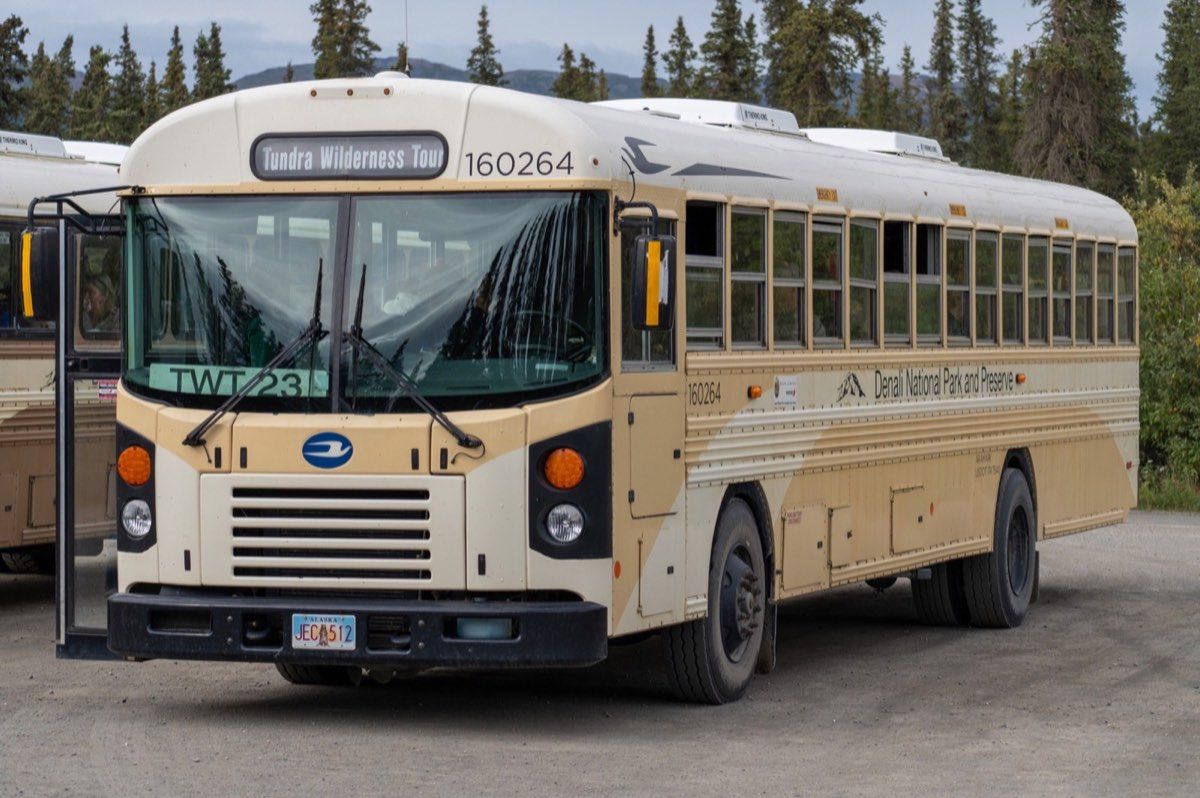
We began with the Tundra Wilderness Tour. It was an uncomplicated introduction because we could simply sit down and spend several hours learning about the park with an experienced driver-naturalist. For later journeys, I would probably choose the less expensive green transit bus. It offers less continuous interpretation but also stops for wildlife and good views. Passengers can get off along the route and later try to continue or return on another transit bus.
The separate bus comparison explains the current prices and differences. For planning a car-free trip, the important point is that both systems work independently of a private vehicle.
How we used our four nights
On our first full day, we took the Tundra Wilderness Tour. It gave us an initial sense of the landscape, produced several wildlife sightings and helped us understand the scale of the park.
On the second day, we hiked near the entrance and chose Mount Healy. The trail climbs through forest before rising in numerous switchbacks. After roughly 550 metres of ascent, it reaches a lower summit with wide views over the front of the national park. The forest felt pleasantly warm, while the exposed upper section was windy and cold.
On our third day, we joined a Discovery Hike after registering in person at the visitor centre. A bus took us into the park, and the hike then continued off trail through knee- to waist-high vegetation, wet ground and along the Savage River. Our ranger, Jeff, explained the tundra, berries, animal tracks and how to move independently through terrain without trails.
The hike covered only a few miles, yet the vegetation and uneven ground made it substantially harder than the same distance on a maintained trail. By the evening, we were exhausted and kept the rest of the day quiet.
Two, three or four full days?
Two full days
With two days, I would use one for a longer transit-bus journey towards East Fork. You can remain on the bus or get off at a suitable place for a walk. I would keep the second day for a hike near the entrance or Savage River. Mount Healy is the longer option; Horseshoe Lake is shorter and more relaxed.
Three full days
With three days, I would try to secure a Discovery Hike as early as possible. I would use another day for the longer bus journey and the third for a hike around the entrance or Savage River. The exact order should depend on the weather and the available Discovery Hike.
Four full days
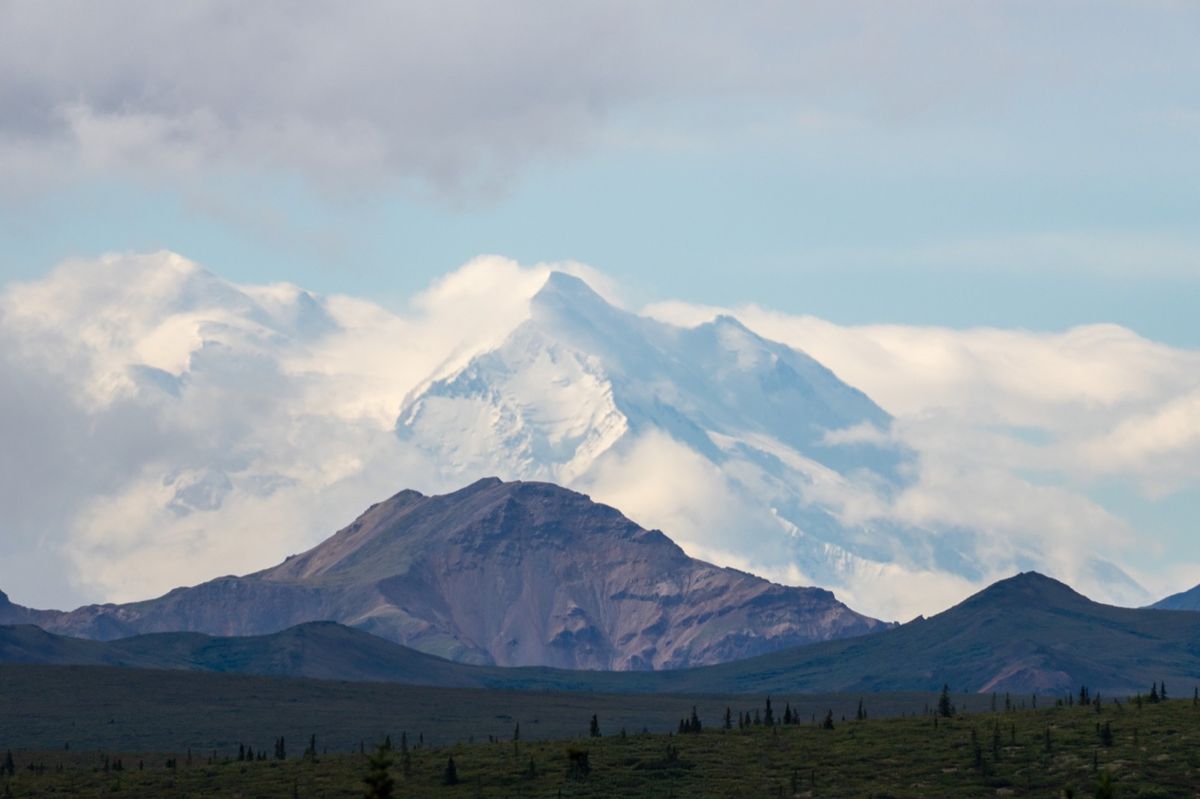
A fourth day creates space for a more independent hike using the transit bus or for moving plans when the weather is poor. Denali itself is often hidden by cloud, so I would not fix the entire schedule in advance. An extra day simply increases the chance of experiencing the park under different conditions.
When a car would still help
A car would be useful for a large food shop or a more flexible journey from Anchorage. It would also allow more spontaneous stops along the road. Once at Denali, however, I think most visitors gain surprisingly little from having one.
Beyond the publicly accessible section of the Park Road, everyone needs a park bus. Around the entrance, the free shuttles worked well and many facilities were within walking distance. For us, a car was never the missing piece that determined what we could do.
My conclusion
Denali National Park is very manageable without a car. Food, luggage and bus journeys need slightly more deliberate planning, but you lose little freedom inside the park. If anything, we could watch the landscape during the journey and did not have to think about roads, parking or a rental car.
Two days already provide a good introduction. Three make space for a Discovery Hike, and four give you enough flexibility to respond to the weather and your own energy. In the end, that flexibility mattered to us much more than having a car.
Checked separately